The most common mistake we see with Austin foundations? Basing a design on regional geology maps instead of site-specific blow counts. The Edwards Plateau and Blackland Prairie meet right here, creating transitions from hard limestone to expansive clay within half a mile. A Standard Penetration Test eliminates that guesswork. We run the split-spoon sampler under ASTM D1586-18 using a calibrated 140 lb hammer with a 30-inch drop. What you get is a borehole log with raw N-values every 2.5 feet, groundwater observations, and our field classification per ASTM D2487. For sites near Shoal Creek or the Balcones Escarpment, we often pair SPT with a CPT test where continuous profiling is needed through soft alluvium before hitting rock.
In Austin’s transition zones, the SPT blow count can double within 5 vertical feet—that inflection point is where your foundation performance is decided.
Methodology and scope
Local considerations
Under IBC 2021 Section 1803, every foundation design in Austin requires a geotechnical investigation that includes in-situ testing. SPT data is the minimum standard, but the real risk is misinterpreting N-values in partially cemented soils. We have seen weathered limestone zones that break down under the hammer into calcareous sand, producing artificially low blow counts that suggest a soft layer where a competent bearing stratum actually exists. The opposite happens in dry fat clays: high N-values in August don't reflect the 60% strength loss after a wet winter. Our logs annotate these conditions. For critical structures near the Balcones Fault zone, we recommend supplementing SPT with shear wave velocity measurements to capture the dynamic soil properties that govern seismic site class per ASCE 7-22.
Applicable standards
ASTM D1586-18: Standard Test Method for SPT, ASTM D2487-17: Unified Soil Classification System, IBC 2021, Section 1803: Geotechnical Investigations
Associated technical services
Standard SPT Boreholes
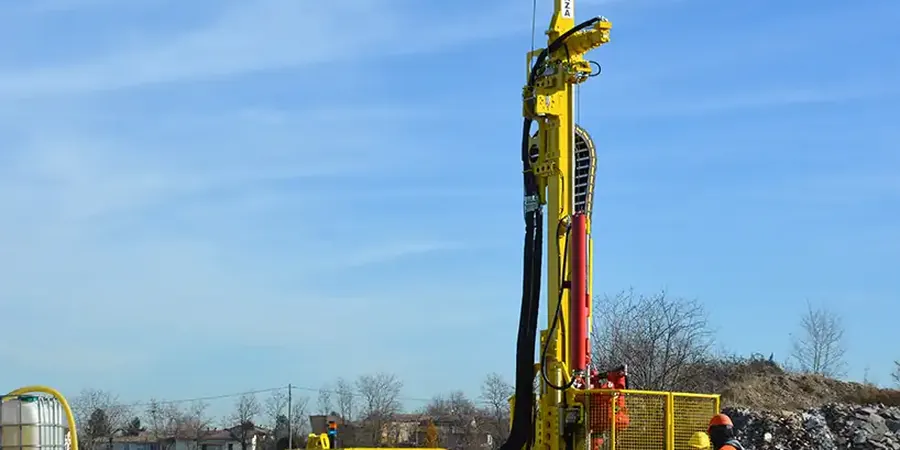
Drilled to depths of 20 to 60 feet using hollow-stem augers or rotary wash through rock. Includes N-value logs, groundwater monitoring, and field soil classification.
Combined SPT and Lab Testing
We pair the field program with Atterberg limits, grain size analysis, and unconfined compression testing on selected split-spoon samples for foundation parameter derivation.
SPT for Liquefaction Screening
In sandy alluvial deposits along the Colorado River corridor, we run SPT-based liquefaction assessments following the NCEER/Youd-Idriss methodology.
Typical parameters
Frequently asked questions
What is the typical cost for an SPT drilling program in Austin?
For a standard investigation with two boreholes reaching depths between 25 and 40 feet, the range is US$520 to US$720 per borehole. The final number depends on access, traffic control requirements, and whether we encounter rock that requires rotary coring.
How deep do you typically drill for a residential foundation in Austin?
Most single-family projects need 20 to 30 feet. In West Austin, we often hit rock earlier and stop at refusal. East of I-35, we go deeper to get through the active clay zone and into more stable material.
Do you correct N-values for overburden pressure and hammer energy?
Yes. We provide both the raw field N-values and the corrected N60 values. For overburden correction we use the Liao and Whitman method; hammer energy correction is based on our automatic trip hammer calibration data.
Can SPT identify a potential karst cavity in the limestone?
SPT can detect voids indirectly—if the sampler suddenly drops under its own weight after hitting rock, that's a red flag. But for reliable cavity detection, we recommend adding electrical resistivity or seismic refraction surveys to the scope.
How fast can you mobilize a drill rig in the Austin area?
For sites within Travis County, we typically schedule the rig within 5 to 7 working days after the utility clearance ticket is marked. Expedited mobilization is possible for emergency assessments.