Geotechnical laboratory testing forms the backbone of any successful construction or infrastructure project in Austin, Texas. This category encompasses the physical and mechanical evaluation of soil and rock samples collected from your site, translating raw field data into the engineering parameters essential for safe design. From expansive clay characterization to strength testing for deep foundations, a comprehensive laboratory program reveals how the ground will interact with your proposed structure. In Austin's dynamic regulatory and geologic environment, skipping or minimizing this phase can lead to costly foundation failures, pavement distress, or slope instability.
Austin's geology is famously complex, dominated by the Balcones Fault Zone which creates a transition between the rocky limestone of the Edwards Plateau to the west and the softer, clay-rich Blackland Prairie to the east. Many sites, particularly on the east side and along major corridors, are underlain by highly plastic Taylor Group clays. These soils are notorious for significant volume changes during Austin's cyclical wet-dry seasons, a phenomenon that demands precise laboratory measurement of index properties. A classic Atterberg limits test is not just a routine check here; it is a critical predictor of a soil's shrink-swell potential, directly influencing foundation design decisions such as the depth of drilled piers or the need for moisture-conditioned select fill.
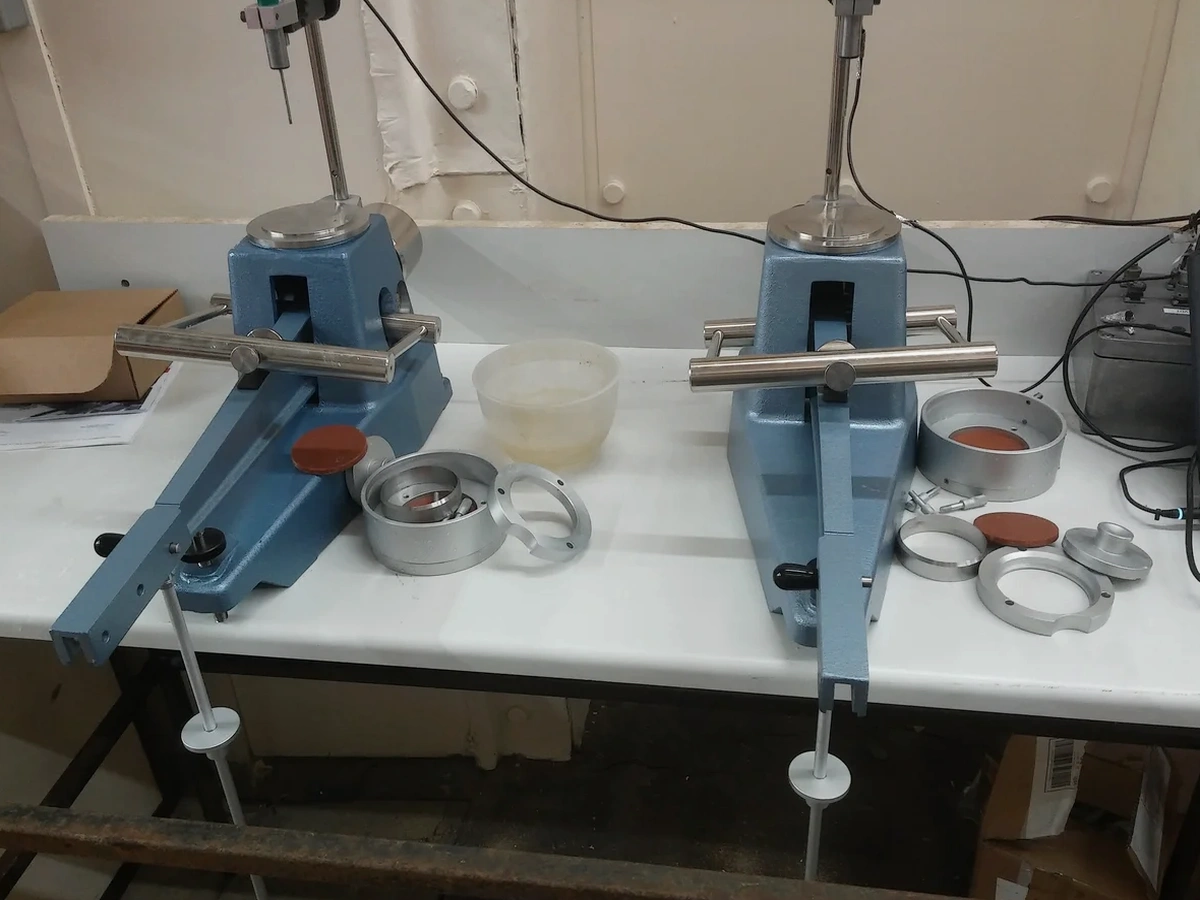
Regulatory compliance in the United States, and specifically within Austin, relies heavily on standards established by ASTM International. Testing methodologies must strictly follow procedures like ASTM D422 for particle size distribution and ASTM D4318 for liquid and plastic limits. A detailed grain size analysis (sieve + hydrometer) is fundamental for classifying soils under the Unified Soil Classification System (USCS), a language universally understood by geotechnical engineers, structural designers, and City of Austin permitting officials. Adherence to these ASTM standards ensures your project's geotechnical report withstands rigorous review, satisfying the requirements of the International Building Code (IBC) as adopted locally.
These laboratory services are indispensable across a wide spectrum of Austin projects. Commercial high-rise developments in the Domain or downtown rely on triaxial and consolidation tests to engineer deep basements and mat foundations. Residential subdivisions stretching into the eastern suburbs require extensive Atterberg and suction testing to validate post-tensioned slab-on-grade designs. Public infrastructure, from Texas Department of Transportation (TxDOT) highway widenings on I-35 to City of Austin waterline installations, mandates precise laboratory compaction curves (Proctor tests) and corrosivity assessments to ensure longevity and safety. Ultimately, a robust laboratory investigation de-risks your project by providing the quantifiable data needed to optimize earthwork, select appropriate construction materials, and prevent geotechnical surprises during excavation.
Frequently asked questions
Why is laboratory testing required for my Austin project when field tests were already done?
Field tests like Standard Penetration Tests (SPT) provide valuable in-situ data, but they cannot measure intrinsic soil properties such as plasticity, gradation, or shear strength under controlled drainage conditions. Laboratory testing on undisturbed samples is essential to quantify these parameters, which are legally required in geotechnical reports to satisfy Austin's building code and to design foundations that can withstand our local expansive clay conditions.
How do I know which laboratory tests are necessary for my specific site in Austin?
The required suite of tests is determined by a geotechnical engineer based on the site geology, proposed structure type, and anticipated loads. In Austin, index tests like Atterberg limits and grain size analysis are almost always mandatory due to expansive clay risk. More advanced strength or consolidation tests are added for projects with heavy structural loads, deep excavations, or where the Balcones Fault Zone introduces variability.
What qualifications should a geotechnical laboratory have to work on projects in Austin, Texas?
The laboratory should be accredited by a recognized body such as AASHTO re:source or the U.S. Army Corps of Engineers, demonstrating proficiency in ASTM standards. Key qualifications include having calibrated equipment, trained technicians, and a rigorous internal quality control program. For TxDOT-funded work, the lab must hold specific prequalification certifications to ensure test results are legally defensible and accepted by Austin permitting authorities.
How long does a standard geotechnical laboratory testing program typically take to complete?
Turnaround time varies significantly with the testing complexity and current laboratory backlog. Basic index tests like moisture content, grain size analysis, and Atterberg limits can often be completed within 5 to 7 business days. However, tests requiring longer curing or multiple loading stages, such as consolidation or triaxial shear, may extend the schedule to two or three weeks. Expedited services are often available for time-sensitive Austin construction deadlines.