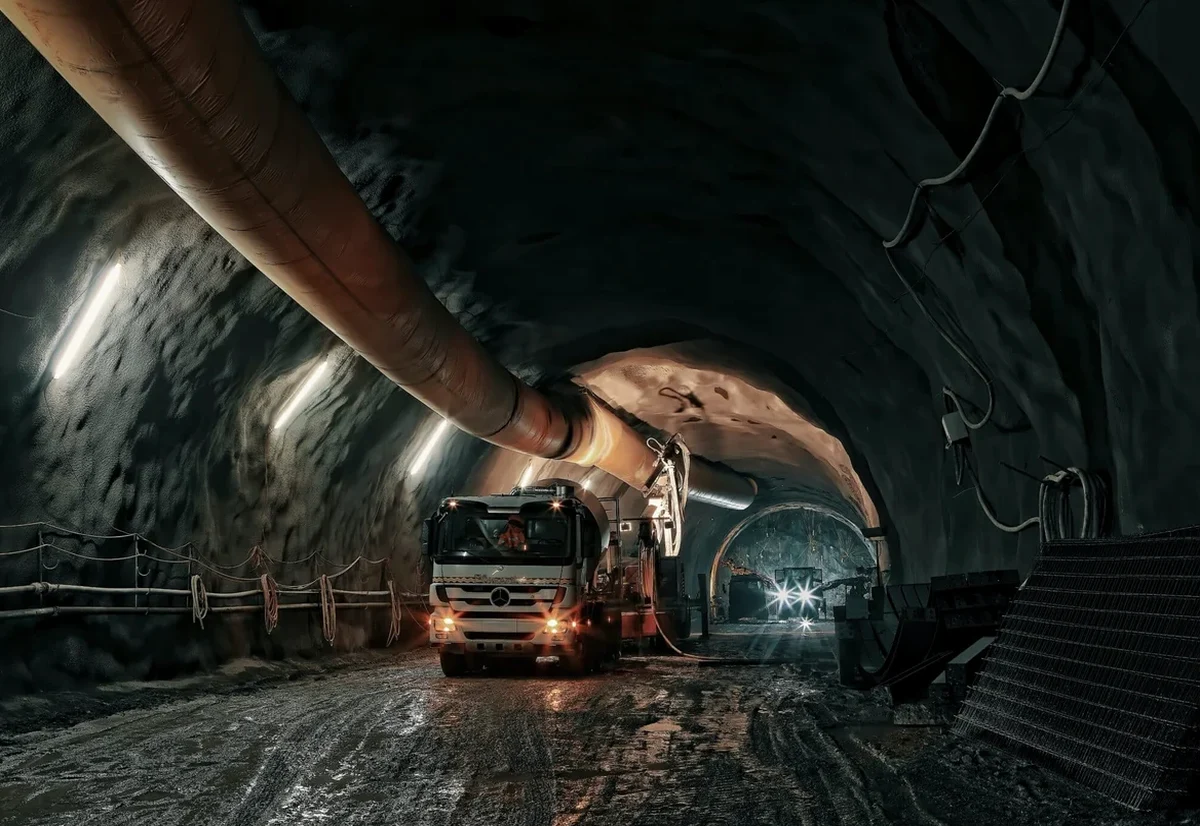
Austin's rapid growth from a college town to a tech metropolis has pushed infrastructure into challenging ground. The Balcones Fault Zone slices through the city, juxtaposing hard Edwards Limestone against expansive Taylor Marl and alluvial clays east of I-35. Tunneling through this transition zone demands a geotechnical analysis that goes far beyond standard site investigation. Soft soil conditions, particularly in the Blackland Prairie formation, exhibit shrink-swell behavior and low stand-up time, making tunnel face stability a primary concern. Our team applies high-frequency core logging, in-situ pressuremeter tests, and laboratory triaxial consolidation to quantify the undrained shear strength and modulus of subgrade reaction, essential parameters for any tunnel boring machine (TBM) or sequential excavation method (SEM) planned within Austin's city limits. For projects near Waller Creek, where groundwater fluctuates seasonally, we often recommend a complementary CPT test to map continuous stratigraphy and detect potential karst voids before tunnel alignment is finalized.
In Austin's transition zone, a tunnel can encounter cemented limestone and soft clay within the same heading; assuming uniform conditions is the fastest path to a face collapse.
Methodology and scope
Local considerations
The most common error in Austin's soft ground tunneling is neglecting the impact of sulfate-rich groundwater on shotcrete and steel support systems. East Austin soils, derived from the Taylor Group, frequently contain gypsum and pyrite, which produce sulfuric acid upon oxidation. A geotechnical analysis that omits chemical testing for aggressive ground conditions can lead to severe corrosion of tunnel liners within a decade. Another critical oversight is underestimating the lateral squeeze potential in high-plasticity clays when tunneling beneath neighborhoods like Cherrywood or Holly. Without a solid convergence-confinement analysis, the initial support can overload, resulting in surface settlements that damage historic bungalows and infrastructure. Our laboratory testing program quantifies these risks early, evaluating both the mechanical and chemical aggressivity of the ground to specify the correct type of cement, liner thickness, and waterproofing membrane.
Regulatory framework
ASTM D4767 for consolidated undrained triaxial testing, ASCE 7-22 for minimum design loads, ASTM D4318 for Atterberg limits, FHWA-NHI-09-010 as the technical manual for road tunnel design and construction, and ASTM D4546 for one-dimensional swell or collapse of soils are applied.
Other technical services
Soft Ground Characterization for Tunneling
A comprehensive field and lab program to determine soil behavior type, undrained strength, and consolidation parameters. Includes borings with SPT per ASTM D1586, thin-wall Shelby tube sampling, and laboratory triaxial CU and UU tests to model excavation response in Austin's plastic clays and marls.
Karst and Geohazard Assessment
Targeted investigation of the limestone-clay interface for karst features, cavities, and perched water zones typical of the Edwards Aquifer recharge zone. Uses rotary wash drilling, downhole geophysics, and tracer testing to mitigate the risk of sudden water inflow or ground loss during tunnel excavation.
Typical parameters
Frequently asked questions
How do you handle the variable rockhead typical of the Balcones Fault Zone?
The rockhead profile in Austin is notoriously erratic, with pinnacles and troughs that can mislead a tunnel alignment. We use a combination of closely spaced borings, electrical resistivity tomography, and seismic refraction to map the limestone surface, then integrate this data into a 3D geological model that guides TBM selection and advance rate predictions.
What laboratory tests are critical for soft ground tunnel design in Austin?
Beyond standard classification, the critical tests are consolidated undrained triaxial tests with pore pressure measurement (ASTM D4767) to define effective stress strength, one-dimensional consolidation tests (ASTM D2435) for settlement prediction, and swell tests (ASTM D4546) for the expansive Taylor Marl. Chemical analysis for sulfates and chlorides is also mandatory to specify durable support systems.
What is the typical cost range for a tunnel geotechnical investigation?
What method do you use to predict surface settlements from tunneling?
We employ empirical methods based on the Gaussian curve distribution (Peck 1969), calibrated with finite element models using PLAXIS or FLAC. Input parameters are derived directly from triaxial and consolidation tests on undisturbed samples, allowing us to predict the settlement trough width and maximum vertical displacement with reasonable accuracy for Austin's clay formations.